
How Florida 14 is Boosting the Economy One Job at a Time
Why Economic Growth Florida 14 Matters for Tampa Bay Families
Economic growth Florida 14 is reshaping the Tampa Bay region — and the numbers back it up.
Here’s a quick snapshot of where things stand:
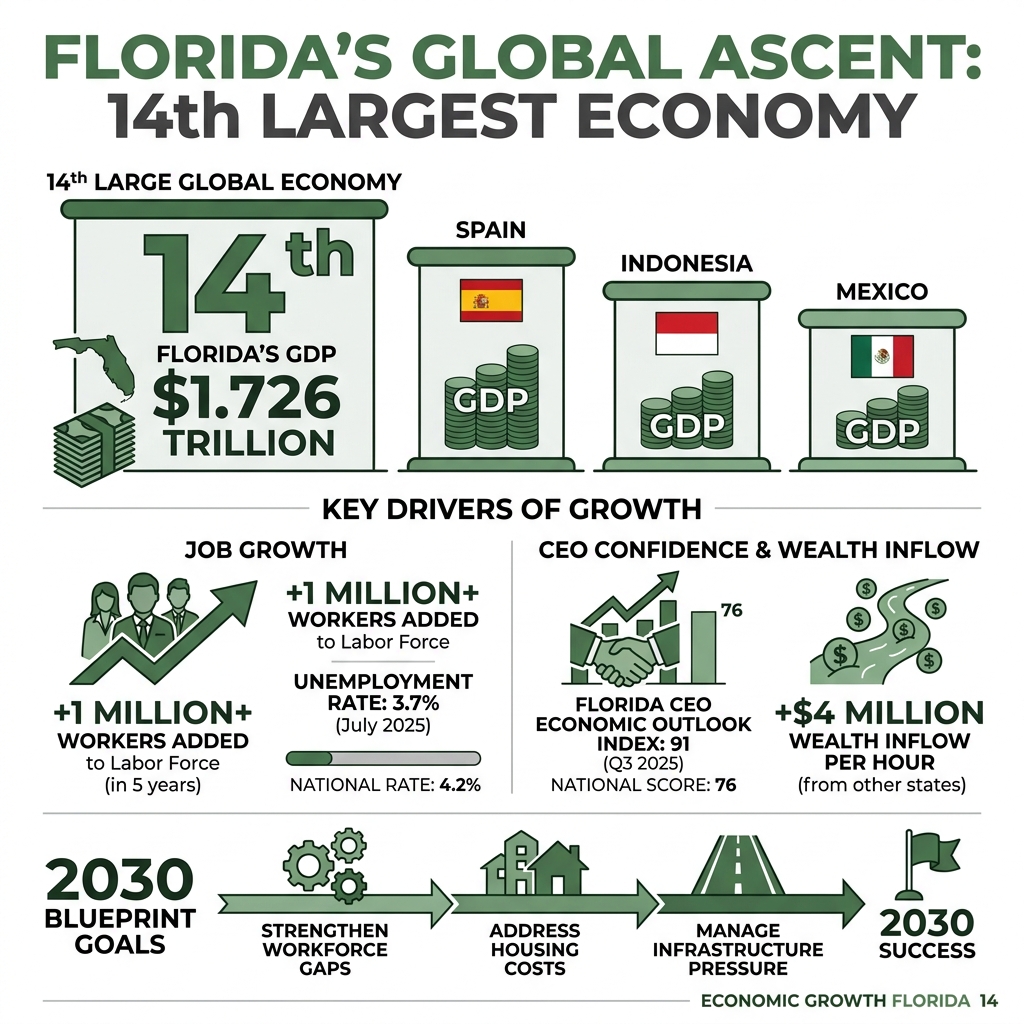
- Florida’s GDP: $1.726 trillion (2024), the 4th largest in the U.S. and 14th largest in the world
- Tampa Bay (Hillsborough County): Accounts for nearly 9% of Florida’s total GDP
- Job growth: Florida added over 1 million workers to its labor force in five years
- Unemployment: Florida’s rate sits at 3.7% (July 2025), well below the national 4.2%
- Wealth inflow: More than $4 million flows into Florida every single hour from other states
- CEO confidence: Florida’s CEO Economic Outlook Index hit 91 in Q3 2025, far above the national score of 76
Florida has climbed from the 17th largest economy in the world in 2018 to the 14th today — surpassing Spain, Indonesia, and Mexico along the way. That rise didn’t happen by accident. It’s the result of population growth, business relocations, and a pro-growth policy environment that has made Florida one of the most competitive economies on the planet.
For families in Tampa Bay, this growth means more jobs, rising wages, and expanding opportunity. But it also comes with real challenges — housing costs, workforce gaps, and infrastructure pressure that need honest solutions, not just talking points.
I’m Shay Williams, a retired U.S. Coast Guard Commander with over 30 years of service, and my campaign for Congress in Florida’s 14th District is focused on turning economic growth Florida 14 from a headline into a reality for working families across this region. In the sections below, we’ll break down exactly what’s driving this growth, what’s at risk, and what it means for you.
Florida’s Global Ascent: Surpassing International Benchmarks
When we talk about the scale of the Florida economy, it is no longer enough to compare ourselves to other states. We are now competing on a global stage. As of 2024, Florida’s Gross Domestic Product (GDP) reached a staggering $1.726 trillion. If Florida were a sovereign nation, we would be the 14th largest economy in the world.
Think about that for a second. Our “Sunshine State” has an economy larger than many well-established nations. In the last five years alone, our GDP grew by 55%, adding $510 billion in value. To put that in perspective, we have leapfrogged countries like Spain, Mexico, and Indonesia. We are currently nipping at the heels of South Korea and are only about $570 billion behind Italy, which currently holds the #10 spot globally.
| Entity | Global GDP Ranking | Economic Scale |
|---|---|---|
| South Korea | 13th | ~$1.71 Trillion |
| Florida | 14th | $1.726 Trillion |
| Spain | 15th | ~$1.58 Trillion |
| Mexico | 16th | ~$1.47 Trillion |
This rapid ascent is detailed further in the 2026 Florida Annual State Economic Outlook | Comerica, which highlights how Florida’s real GDP growth reached 1.4% in the first quarter of 2025, while the national U.S. growth actually dipped by 0.5%. We aren’t just growing; we are leading the nation out of economic uncertainty.
Tracking the 2030 Blueprint Progress
Our success isn’t just luck; it’s a plan in motion. The Florida 2030 Blueprint is a strategic roadmap designed to make Florida a top-10 global economy by the end of the decade. We’ve just hit the “halftime” mark for this initiative, and the results are encouraging.
Out of 39 measurable goals, we have already achieved two ahead of schedule and are on track for eight more. We’ve seen our labor force grow by over 1 million people since the blueprint launched—a massive jump compared to the 700,000 added in the five years prior. This kind of momentum shows how supply-side policies can fix a sluggish economy by empowering the private sector to lead the way. By focusing on talent supply, infrastructure, and global competitiveness, we are ensuring that the economic growth Florida 14 experiences today is sustainable for the next generation.
Key Drivers of Economic Growth Florida 14 and Tampa Bay
The engine behind our local prosperity is a combination of people, money, and business. Florida currently ranks first in the nation for net migration. People aren’t just coming here for the beaches; they’re coming for the opportunity.
Every single hour, approximately $4 million in wealth flows into Florida from other states. While high-tax states like New York are losing over $1 million an hour, we are gaining the capital necessary to build new businesses and create high-paying jobs. This massive income migration is five times higher than it was in 2018. For those looking to enter this thriving market, it’s time to stop searching and start working in Tampa Bay, where the demand for talent has never been higher.
Corporate relocations are also at an all-time high. Major tech firms and financial institutions are fleeing “death spiral” policies in other regions to set up shop in the Tampa Bay area. This influx of capital spending and business startups is what keeps our local unemployment rate at a healthy 3.7%, compared to the national average of 4.2%.
Sector Strength in the 14th District
While many think of Florida as just a tourism hub, our economy is incredibly diverse. Yes, tourism is booming—Florida welcomed a record 142.997 million visitors in 2024—but we are so much more than theme parks and hotels.
In the 14th District and the surrounding Tampa Bay area, we have several “power sectors” driving our GSP:
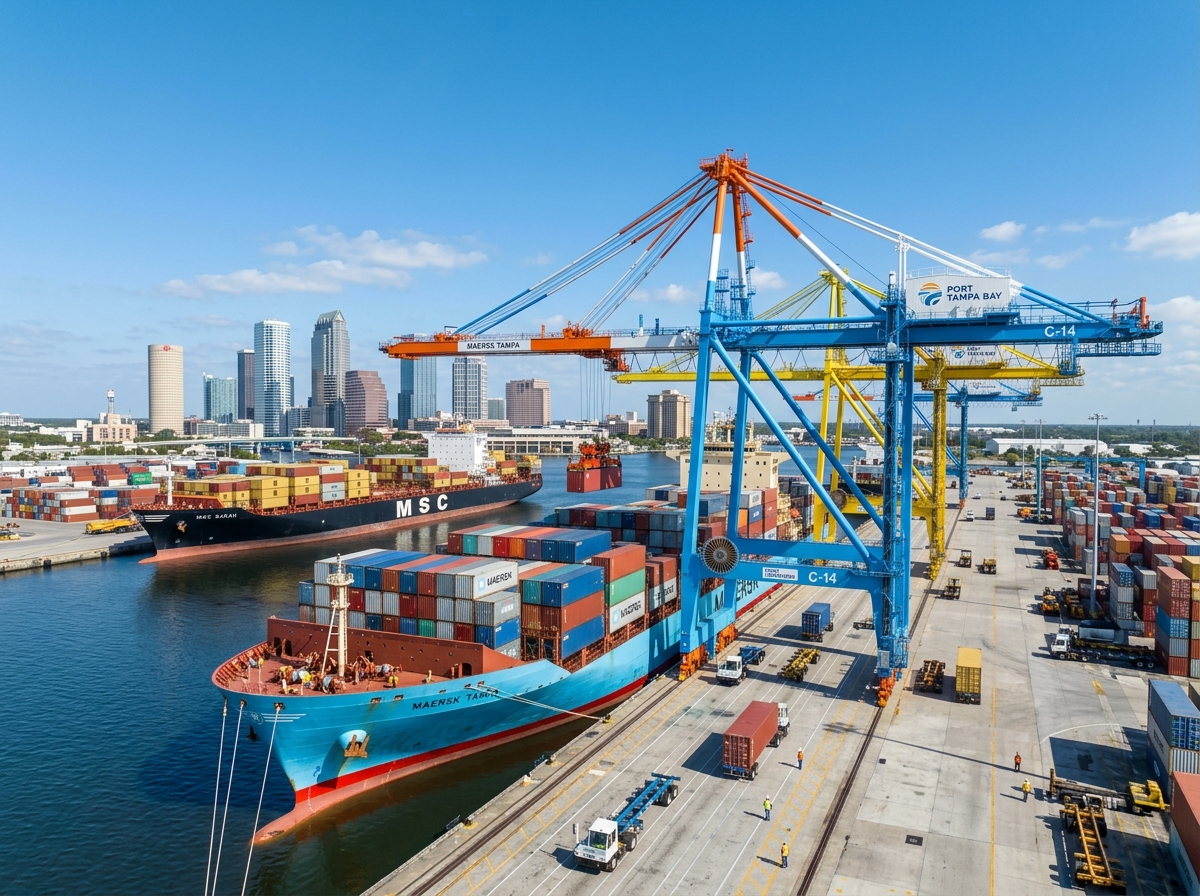
- Port Tampa Bay: This is the largest port in Florida by tonnage, supporting over 80,000 jobs and acting as a gateway for international trade.
- Agriculture: Did you know that Plant City produces three-quarters of America’s winter strawberries? We also lead the nation in the production of bell peppers, tomatoes, and grapefruit.
- Aerospace and Tech: Tampa has been recognized as one of the fastest-growing tech hubs in the country. According to recent reports, Tampa Named One of the Fastest-Growing Economies in America, thanks to our burgeoning aerospace and cybersecurity industries.
- Real Estate: Real estate and construction remain vital, especially as we work to meet the housing demands of 500 to 600 new residents moving to the state every day.
The ‘Secret Sauce’ of Florida’s Pro-Business Climate
What makes Florida different? Why are we thriving while other states struggle? We like to call it the “Secret Sauce.” It’s a blend of fiscal discipline, low taxes, and a government that stays out of the way of the private sector.
Florida has the lowest debt per capita in America, at roughly $1,000 per resident. Unlike other states that borrow against their children’s futures, Florida often pays cash for major infrastructure projects. We have no state income tax, which is a massive draw for both billionaires and blue-collar workers alike.
This environment creates a level of optimism you won’t find elsewhere. The Florida Council of 100’s Q3 2025 CEO Economic Outlook Index scored a 91—significantly higher than the national score of 76. This indicates that our business leaders are ready to hire and invest. The Florida Economic Forecast 2025–2035 Q4 2025 | Florida TaxWatch suggests that while growth may normalize to pre-pandemic levels, our momentum is sustainable through 2035 if we maintain these core principles.
Sustaining Economic Growth Florida 14 Through Policy
To keep the economic growth Florida 14 relies on moving forward, we must continue to champion policies that work. This means:
- Regulatory Reform: Cutting the red tape that prevents small businesses from opening their doors.
- Infrastructure Investment: Expanding our roads, energy grids, and water systems to handle our growing population.
- Capital Spending: Encouraging businesses to reinvest their profits into new equipment and technology.
We are committed to working for you to ensure that the federal government supports, rather than hinders, Florida’s unique economic model. By keeping taxes low and spending responsible, we can ensure the Tampa Bay area remains the crown jewel of the American economy.
Overcoming Obstacles to Long-Term Prosperity
We have to be honest: growth brings growing pains. If we want to reach that top-10 global ranking, we have to tackle the “elephants in the room.”
The number one risk identified by Florida business leaders is housing affordability. As more people move here, the cost of living has risen. We need an “all of the above” approach to housing—increasing supply, reducing construction regulations, and addressing the property insurance crisis that is squeezing Florida families.
Workforce development is another critical area. While our labor force is growing, we still face shortages in specialized fields. We must align our education system with the needs of the 21st-century economy. This includes supporting vocational training and ensuring our graduates are ready for high-tech jobs in aerospace and cybersecurity.
Finally, we cannot ignore the 15% of ZIP codes where over half of our children live in poverty. True economic growth Florida 14 means lifting up every neighborhood. By targeting these specific areas with better schools and job opportunities, we can reduce childhood poverty—which has already declined by 158,000 since the 2030 Blueprint began.
Future Forecasts for Economic Growth Florida 14
Looking ahead, the forecast for our region is bright but requires careful management. Florida’s population topped 23 million in 2024 and is projected to hit 25 million by 2030. According to data on Congressional District 14, FL | Data USA, our district is a focal point for this expansion.
As the Baby Boomer generation enters retirement, we will see a shift in our labor force participation. This makes talent development even more vital. We are also seeing the wage gap between Florida and the national average narrow, with Florida’s average wage reaching nearly 92% of the U.S. average in 2024. This means more “buying power” for Tampa Bay families and a higher standard of living across the board.
Frequently Asked Questions about Florida’s Economy
What is Florida’s current global economic ranking?
Florida is currently the 14th largest economy in the world, with a GDP of approximately $1.726 trillion. It recently surpassed Spain and Mexico and is on track to break into the global top 10 by 2030.
How does the Tampa Bay area contribute to Florida’s GDP?
The Tampa Bay area, specifically Hillsborough County, is a massive economic engine for the state. It accounts for approximately 8.96% to 9.01% of Florida’s total GDP. Our region is a leader in trade, agriculture, and technology.
What are the primary risks to Florida’s 2030 economic goals?
The most significant risks are housing affordability, the rising cost of property insurance, and workforce shortages. Business leaders also keep a close eye on infrastructure needs as the population continues to grow by hundreds of people every day.
Conclusion
The story of economic growth Florida 14 is one of resilience and ambition. We have proven that with the right leadership and a commitment to free-enterprise principles, we can outpace the nation and compete with the world’s largest economies. From the bustling cranes at Port Tampa Bay to the tech startups in downtown Tampa, the momentum is undeniable.
However, we cannot rest on our laurels. To protect the prosperity we’ve built, we need a representative in Washington who understands the “Secret Sauce” that makes Florida work. We need someone who will fight for lower taxes, secure borders, and a stronger workforce.
We are committed to ensuring that every family in the 14th District has the opportunity to thrive in this new era of growth. Together, we can build a future where Tampa Bay isn’t just a great place to visit, but the best place in the world to live, work, and raise a family.
For more info about Shay Williams’ vision for Florida, join our mission to keep Florida moving forward—one job at a time.