The Signature Move: Understanding Florida Petition Laws
What You Need to Know About Petition Signing Rules in Florida
Petition signing rules florida residents and candidates must follow are set by state law and vary depending on the type of petition involved. Here is a quick overview:
Key Florida Petition Signing Rules at a Glance:
| Rule | Candidate Petitions | Initiative Petitions |
|---|---|---|
| Who can sign | Registered voters in the district | Registered Florida voters |
| Signatures required | 1% of registered voters in the area | 8% of last Presidential election votes |
| Valid form required | DS-DE 104 | State-approved form |
| Original signature | Yes | Yes |
| Electronic signatures | Not valid | Not valid |
| Can you revoke your signature? | No | No |
| Verification fee | $0.10 per signature | Varies by county |
| Deadline | Office-specific qualifying deadline | February 1 of general election year |
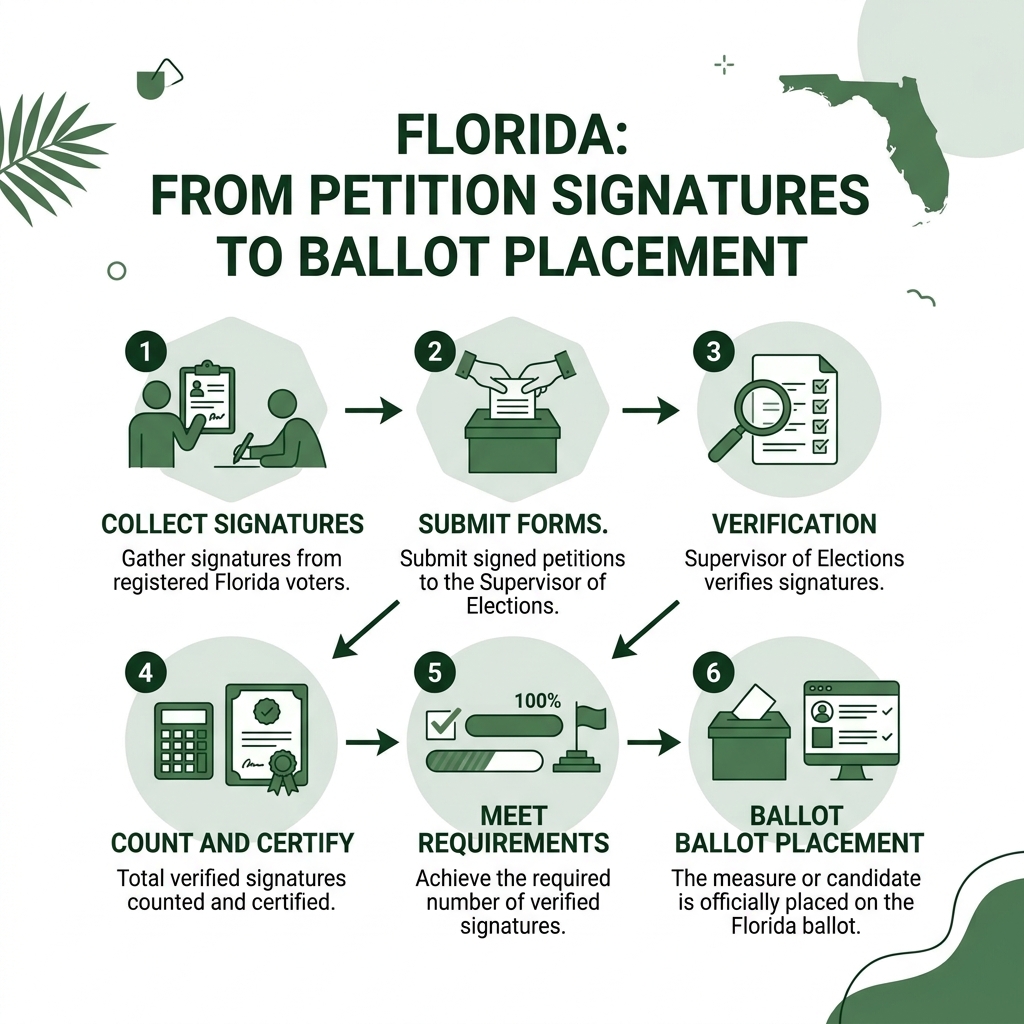
There are two main petition types in Florida: candidate petitions (used to get on the ballot without paying fees) and initiative petitions (used to propose changes to the Florida Constitution). Each has its own rules, forms, deadlines, and penalties for violations.
Getting these details wrong can cost a campaign thousands of signatures – or worse, get a candidate removed from the ballot entirely. That is why understanding the rules before you collect a single signature matters.
I am Shay Williams, a retired U.S. Coast Guard Commander running for Congress in Florida’s 14th District, and my 30 years of experience navigating complex federal regulations has given me a deep appreciation for the importance of following the rules – including petition signing rules florida candidates and advocates must comply with. In this guide, I will break down everything you need to know so you can participate in the process with confidence.
Candidate Petition Signing Rules in Florida

In Florida, the “petition method” is a vital tool for grassroots candidates. It allows a person to qualify for the ballot by demonstrating significant community support rather than simply paying a qualifying fee. For many, this is the purest form of ballot access, but it requires strict adherence to the petition signing rules florida mandates.
To use this method, candidates must use Form DS-DE 104, the standard Candidate Petition form. This form must be reproduced exactly as provided by the Division of Elections. Any alteration to the text or format—aside from pre-filling the candidate’s information—can lead to the petition being rejected.
The number of signatures required is generally equal to 1% of the total number of registered voters in the geographical area represented by the office as of the last general election. For those of us running in specific districts, this means the signatures must come from voters registered within those specific boundaries.
Signature Requirements by Office
The scale of the task varies wildly depending on which office you are seeking. Here is how those numbers generally break down based on recent election cycles:
| Office | General Signature Requirement |
|---|---|
| Governor / U.S. Senator | 1% of Statewide Registered Voters (approx. 144,419+) |
| Representative in Congress | 1% of District Registered Voters (approx. 5,000+) |
| State Senator | 1% of District Registered Voters (approx. 1,700 – 2,000) |
| State Representative | 1% of District Registered Voters (approx. 600) |
| Special District | 25 Signatures |
For more detailed information on current initiatives, you can visit the Florida Division of Elections Initiative Petitions page.
Common Candidate Petition Signing Rules in Florida
Before we start asking neighbors for their support, there are several procedural hurdles we must clear:
- The DS-DE 9 Filing: A candidate cannot collect a single signature until they have filed Form DS-DE 9 (Appointment of Campaign Treasurer and Designation of Campaign Depository) with the filing officer. Any signature dated before this filing is automatically invalid.
- Party Affiliation: The party affiliation listed on the petition must match the candidate’s registration. If a candidate changes parties mid-stream, all signatures collected under the old party designation become void.
- Signature Originality: Florida does not allow digital shortcuts. Every petition must have an original ink signature. Photocopies, scanned images, faxes, and electronic signatures are not accepted.
- The Verification Fee: Supervisors of Elections charge a fee to verify each signature. This is typically 10 cents per signature (or the actual cost, whichever is less). This must be paid in advance when the petitions are submitted.
- Undue Burden Oath: If a candidate cannot afford the verification fees, they may file an “Undue Burden Oath.” However, there is a catch: if a candidate pays anyone to collect signatures, they are legally disqualified from claiming an undue burden for those fees.
District-Specific Requirements for Federal Office
In the Tampa Bay area, specifically Florida’s 14th District, the requirements are precise. For the 2024 cycle, a candidate for U.S. Congress in District 14 needed 5,047 valid signatures to qualify.
It is important to note that during “apportionment years” (like 2022), the rules can be slightly more flexible regarding where signatures come from because district lines are being redrawn. However, in standard years, we must ensure every signer lives within the current boundaries of the 14th District. If a well-meaning supporter from just across the district line in Pinellas or Pasco signs a petition for a Hillsborough-based seat, that signature will not count.
Constitutional Initiative Petitions: Amending the State Charter
While candidate petitions get people on the ballot, initiative petitions allow the people to change the law itself by amending the Florida Constitution. This is a much higher mountain to climb.
To get an initiative on the ballot, sponsors must collect signatures equal to 8% of the total votes cast in the last Presidential election. Furthermore, these signatures cannot all come from one place; they must be distributed across at least fourteen of Florida’s twenty-eight congressional districts.
Once an initiative makes it to the ballot, it requires a 60% “supermajority” vote from the electorate to pass. This ensures that the state constitution isn’t changed on a whim, but only through broad, sustained consensus. For more on the legal framework, see Florida Statute 100.371.
Rules for Paid Petition Circulators
Florida has recently tightened the rules for those who are paid to collect signatures. These regulations are designed to prevent fraud and ensure accountability:
- Registration and Training: Paid circulators must register with the Secretary of State and complete mandatory online training. This training covers their fiduciary duties and the criminal penalties for misconduct.
- 30-Day Submission Rule: Any petition collected by a paid circulator must be delivered to the Supervisor of Elections within 30 days of the date it was signed. If they hold onto them longer, the sponsor can face significant fines—ranging from $50 to $1,000 per form.
- Possession Limits: Unregistered individuals are prohibited from possessing more than 25 signed initiative forms at one time (excluding their own or those of immediate family).
- No “Per-Signature” Pay: It is a felony to pay or receive compensation based solely on the number of signatures collected. Circulators must be paid hourly or by salary to avoid the incentive for forgery.
Initiative Form Standards and Deadlines
The petitions themselves must meet strict aesthetic and legal standards. The ballot title is limited to 15 words, and the ballot summary cannot exceed 75 words. Additionally, every initiative must undergo a review by the Financial Impact Estimating Conference to provide voters with a statement of how the change will affect the state’s wallet.
The ultimate deadline is February 1 of the general election year. By 5:00 p.m. on that day, the required number of verified signatures must be certified by the Division of Elections. Because the verification process can take up to 60 days, sponsors usually aim to finish their collection months in advance.
Signature Verification and the Cost of Compliance
Once a stack of petitions is handed over to the Supervisor of Elections, the real work begins. Verification is not just a “rubber stamp” process; it is a meticulous comparison.
Supervisors check the signature on the petition against the signature in the voter’s registration file. They also verify that the address provided matches the registration record and that the voter was active and eligible at the time of signing.
The Verification Fee Structure
As mentioned, the standard fee is 10 cents per signature. While that sounds small, it adds up quickly. For a statewide initiative requiring nearly 900,000 signatures, the verification costs alone can exceed $90,000.
Some counties have different cost structures based on local ordinances. For example, research indicates that in some jurisdictions like Flagler County, the cost has been cited as high as $4.00 per signature for certain periods to cover actual administrative labor. In the Tampa Bay area, candidates should always consult with the Hillsborough or Pinellas Supervisor of Elections to confirm current rates.
Random Sampling: The 99.5% Standard
When a candidate submits significantly more signatures than required (at least 15% more), they can request verification via random sampling. The Department of State sets rules for this process, which must achieve a 99.5% reliability standard in determining if the candidate has met the threshold. However, it is important to note that random sampling is explicitly prohibited for constitutional initiative petitions—those must be verified one by one.
New 2025 Notification Requirements
Starting October 1, 2025, a new layer of transparency will be added to the process. When a Supervisor of Elections verifies an initiative petition signature, they must mail a postcard notification to the voter.
This “Valid Petition Notice” informs the voter that their signature has been recorded for a specific initiative. If the voter never signed that petition, they can return the card to trigger an investigation by the Office of Election Crimes and Security. This is a major step in preventing forgery and protecting the integrity of our voter rolls.
Legal Safeguards and Preventing Petition Fraud
Florida takes election integrity seriously, and the penalties for “cutting corners” are severe. We believe that a fair election starts with a fair petition process.
Prohibited Practices and Enforcement
According to Florida Statute 104.185, the following actions are criminal offenses:
- Duplicate Signing: Knowingly signing a petition more than once for the same candidate or issue is a first-degree misdemeanor.
- Forgery: Signing someone else’s name or a fictitious name is a third-degree felony.
- Data Misuse: Using personal information from a petition for any purpose other than the petition process is a felony.
Sponsors are also held to high standards. They act as fiduciaries to the voters. If a sponsor willfully fails to deliver a petition signed by a voter, they are effectively silencing that citizen’s voice, and the state can impose fines up to $5,000 per violation.
Finally, while we encourage civic engagement, it is important to remember private property rights. Property owners in Florida have the right to prohibit petition collection on their premises. Always check for permission before setting up a table at a local shopping center or storefront.
Frequently Asked Questions about Florida Petition Rules
Can I revoke my signature after signing a petition?
No. Under current Florida law, there is no legal authority or mechanism for a voter to revoke their signature once the petition has been received by the Supervisor of Elections. Before you sign, make sure you fully understand the ballot title and summary.
What makes a candidate petition signature invalid?
Several common errors can lead to a signature being tossed out:
- The voter is not registered in the correct county or district.
- The signature date is before the candidate filed their DS-DE 9 form.
- The voter’s signature does not reasonably match the one on file.
- The voter used a digital or electronic signature.
- The petition form is an outdated version (always use the current DS-DE 104).
How do I check the status of a petition initiative?
The Florida Division of Elections maintains a public Initiatives Database. You can use this portal to track the progress of any constitutional amendment, see how many signatures have been certified in each congressional district, and read the full text of the proposed changes.
Conclusion
Final Thoughts on Petition Signing Rules in Florida
The process of gathering and verifying signatures is the heartbeat of Florida’s democratic system. Whether it is a candidate like us working to represent the families of the 14th District or a group of citizens looking to improve our state constitution, the petition signing rules florida enforces ensure that every name on that ballot earned its spot through transparency and hard work.
At the Shay Williams Campaign, we believe in playing by the rules and upholding the integrity of our elections. We are fighting for economic growth, secure borders, and a government that respects the law. Understanding these rules is just the first step in making your voice heard.
If you believe in a Florida that values law and order and economic opportunity, we invite you to join our movement. Together, we can ensure that the Tampa Bay area has the strong, principled leadership it deserves in Washington.