Blue Lives Matter Florida 101
What Blue Lives Matter Florida Means — and Why It Matters Right Now
Blue Lives Matter Florida is a pro-law enforcement movement that supports police officers, firefighters, and first responders — and it has shaped real policy debates, flag disputes, and legislation across the Sunshine State.
Here’s a quick overview of what you need to know:
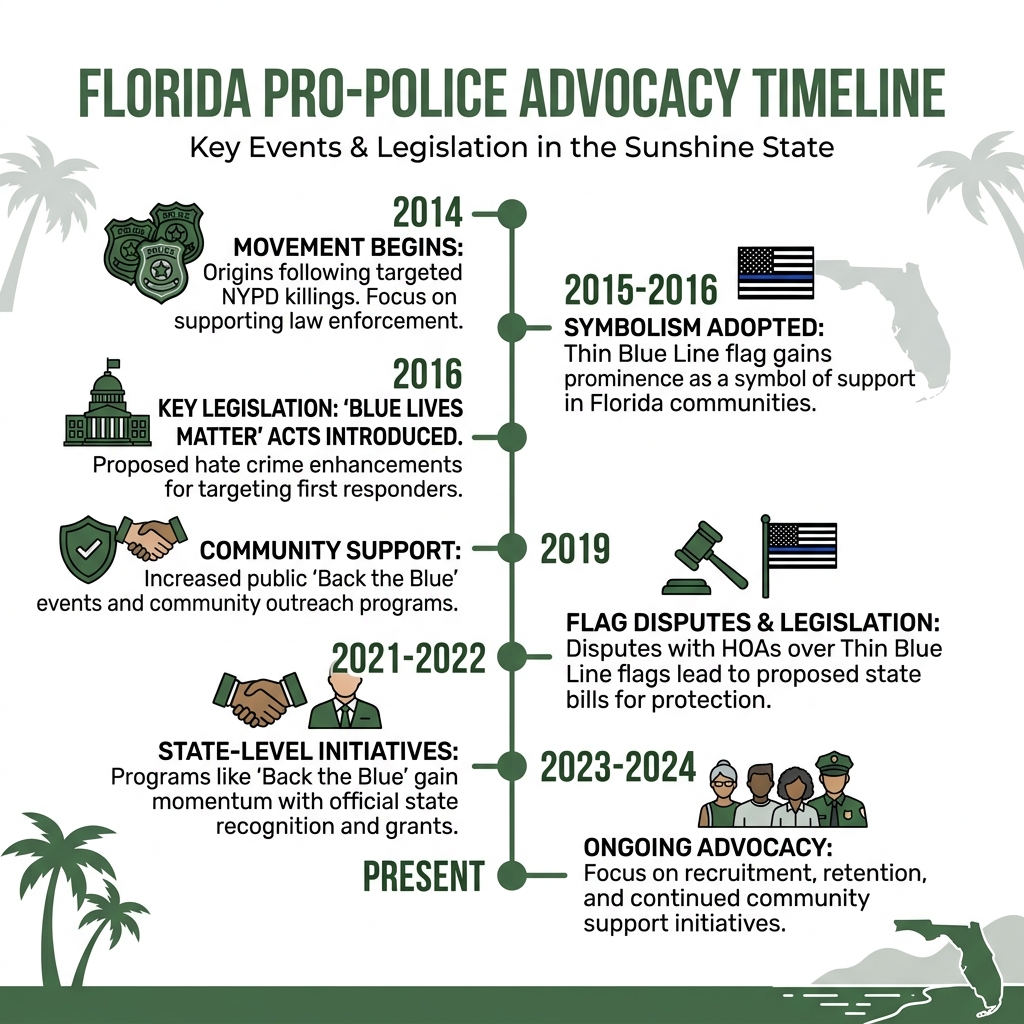
- The movement began in 2014, after two NYPD officers were killed, as a direct counter to rising anti-police sentiment
- The Thin Blue Line flag is its most recognized symbol — honoring fallen officers and firefighters
- Florida HOAs have tried to ban the flag, sparking legal battles and proposed legislation like House Bill 437
- The “Blue Lives Matter Act” has been proposed in Florida to classify attacks on first responders as hate crimes with enhanced penalties
- State programs like “Back the Blue” and community nonprofits like Bleeding Blue actively support law enforcement families across Florida
For Tampa Bay residents who believe in strong, safe communities and respect for the officers who protect them, this movement hits close to home.
The debate in Florida isn’t just symbolic. It touches on real laws, real neighborhoods, and real families. A retired Pasco County deputy named Sean Kennedy put it plainly when his HOA told him to take down his Blue Lives Matter flag after 25 years of service — he refused. “The flag has nothing to do with active police or racism,” he said. “It honors those killed in service.”
That tension — between community rules, political pressure, and genuine respect for law enforcement — is exactly what this movement is navigating in Florida today.
The Origins and Symbolism of the Movement in Florida
The roots of blue lives matter florida stretch back to a tragic event in December 2014. The movement formed as a counter-response to the Black Lives Matter movement, specifically triggered by the targeted killings of NYPD officers Rafael Ramos and Wenjian Liu. These officers were ambushed while sitting in their patrol car, an event that sent shockwaves through law enforcement agencies nationwide, including right here in Tampa and across the Sunshine State.
In Florida, this movement quickly found its visual identity in the “Thin Blue Line” flag. While some see a political statement, many of our local neighbors see a solemn tribute. The flag typically features a black-and-white version of the American flag with a single horizontal blue stripe. This stripe represents the men and women in blue who stand as the barrier between law-abiding citizens and chaos.
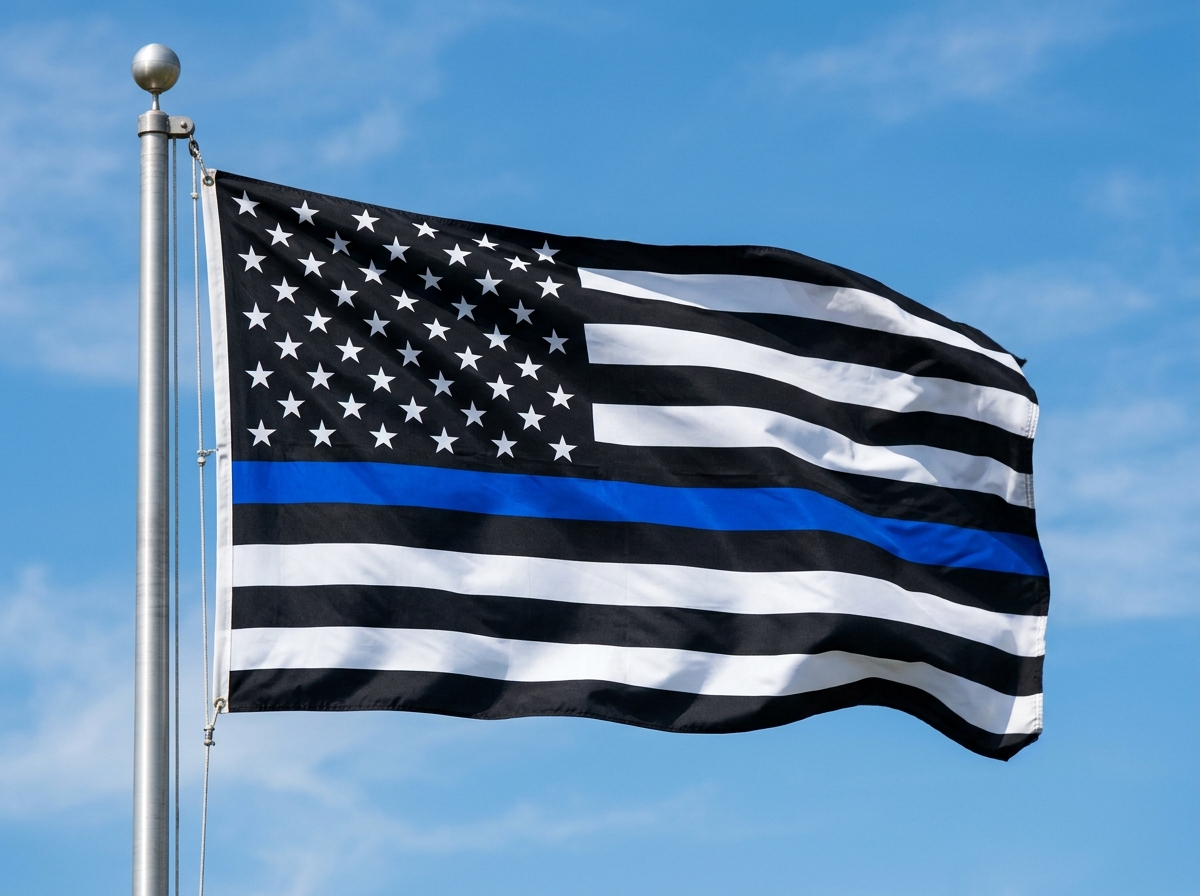
The symbolism often extends to include a red stripe for firefighters, creating a unified front of support for all first responders. However, this symbol has faced pushback in our own backyard. WFLA-TV covered a notable dispute in Pasco County involving Sean Kennedy, a retired deputy with 25 years of service. After hanging the flag to honor fallen comrades, his Homeowners Association (HOA) demanded its removal, claiming it violated community rules. Kennedy’s refusal highlighted a growing sentiment: for many in Florida, this flag isn’t about “active” politics—it’s about the memory of those who never made it home.
Legislative Efforts for Blue Lives Matter Florida
We believe that those who protect our streets deserve the full protection of the law. This belief has fueled several major legislative pushes in Tallahassee. One of the most significant is House Bill 437. This bill was designed specifically to stop HOAs from overstepping their bounds. It aims to protect a homeowner’s right to display flags that use U.S. flag emblems and proportions, regardless of the color scheme—effectively shielding the Thin Blue Line flag from neighborhood bans.
The National Police Association has been a vocal advocate for this type of protection, submitting testimony to the Florida House Judiciary Committee to argue that these flags should be a unifying force rather than a target for “political correctness.”
Beyond flags, there is the “Blue Lives Matter Act.” This proposed legislation seeks to expand Florida’s hate crime statutes to include law enforcement officers, firefighters, and emergency medical researchers.
| Current Hate Crime Protections | Proposed “Blue Lives Matter” Expansions |
|---|---|
| Race and Color | Law Enforcement Officers |
| Religion and Ethnicity | Firefighters |
| Sexual Orientation | Emergency Medical Providers |
| Disability and Elderly Status | Correctional Officers and Judges |
Under these proposals, a crime motivated by the victim’s status as a first responder would see enhanced penalties. For example, a first-degree misdemeanor could be reclassified as a third-degree felony. As WFSU reported on this hate crime expansion, supporters argue these laws are necessary due to “unprovoked ambush assaults,” citing the 2014 killing of a Leon County deputy as a chilling example of why officers need extra legal safeguards.
Community Programs and Blue Lives Matter Florida
Supporting our officers also means making their jobs safer through better communication. Florida is leading the way with the Autism Blue Envelope Bill. This is a practical, compassionate piece of legislation that relates deeply to the themes of the blue lives matter florida movement—protecting both the officer and the citizen.
Florida has one of the highest populations of adults living with autism in the country. During a traffic stop, an “invisible disability” like autism can lead to misunderstandings; an officer might mistake a lack of eye contact or repetitive movements for non-compliance or intoxication. The Blue Envelope program allows drivers to keep their license and registration in a bright blue holder that signals to the officer that the driver may have communication challenges. This simple tool, supported by the Florida DHSMV, helps de-escalate high-stress situations before they begin.
The Legal Significance of Blue Lives Matter Florida Symbols
The legal battle over blue lives matter florida symbols often centers on “deed-restricted” communities. Many HOAs argue that their rules are neutral and intended to maintain a specific aesthetic. However, pro-police advocates argue that banning the Thin Blue Line flag while allowing other displays is a form of selective enforcement driven by a “smear campaign” against law enforcement.
The Florida Police Benevolent Association (PBA) and the Florida Sheriffs Association have both weighed in on these issues. While they strongly support the substance of the protections, some leaders, like those in the Sheriffs Association, have expressed caution about the “Blue Lives Matter” label itself. They worry that the name has become so politically charged that it might distract from the actual goal: keeping officers safe. Regardless of the branding, the push to codify these symbols into law remains a top priority for those of us who want to see our first responders respected.
Navigating Controversies: From HOAs to Public Accountability
No movement exists in a vacuum, and blue lives matter florida has faced its share of scrutiny. Critics often point to incidents like the one in Daytona Beach involving Officer Joel Llinas. A viral video showed the officer punching a handcuffed suspect; while the police union defended the officer, claiming he was bitten, the NAACP and other community groups called for a “witch hunt” to end and for real accountability to take place.
Critics also point to the January 6 Capitol attack, where some rioters—some of whom carried Blue Lives Matter flags—assaulted over 170 police officers. This has led to “hypocrisy” critiques from national media outlets. Furthermore, a 2015 NPR analysis on the “War on Police” suggested that despite the rhetoric, violence against officers was actually on a long-term decline at that time.
However, supporters point to different data. In 2016, FBI stats showed a spike in officer deaths by gunfire (63 deaths), which many used to justify the need for the “Blue Lives Matter Act.” We recognize that while statistics can be debated, the feeling of being targeted is very real for the men and women putting on the badge every morning in Tampa Bay.
Supporting Law Enforcement Families and Community Ties
Beyond the halls of the legislature, the heart of blue lives matter florida is found in the community. Organizations like Bleeding Blue do the heavy lifting that laws cannot. Founded by active-duty officers from the Miami-Dade area, this non-profit provides financial and emotional support to families of officers who are injured or killed in the line of duty.
They have also expanded their mission to tackle a silent killer: first responder suicide. Their mental wellness initiatives aim to break the stigma surrounding mental health in the force. We see this same spirit of gratitude in the “Back the Blue” awards issued by the Florida Attorney General’s office. These awards recognize everyone from detectives solving 20-year-old cold cases to citizens who pause their own weddings to help a crash victim.
Whether it’s a mural outside a police station or a fundraiser for a fallen officer’s children, these efforts prove that “Back the Blue” is more than just a slogan—it’s a commitment to the “True Blue Family.”
Frequently Asked Questions about Police Support in Florida
What is the purpose of the Florida Blue Envelope bill?
The bill creates a voluntary system to help drivers with autism communicate safely with police. By keeping their documents in a blue envelope, drivers can immediately alert officers to potential communication barriers, reducing the risk of misunderstandings during traffic stops.
Can a Florida HOA legally ban the Thin Blue Line flag?
Currently, many HOAs do ban them under “standardized flag” rules. However, House Bill 437 was introduced to protect these displays. If you live in a deed-restricted community, it’s important to check your specific bylaws, but state-level efforts are moving toward protecting your right to fly this flag.
How does the proposed Blue Lives Matter Act change hate crime penalties?
It would add “first responder” as a protected status under Florida’s hate crime law. This means if someone targets a police officer or firefighter specifically because of their job, the criminal charges are “upgraded”—turning misdemeanors into felonies and increasing potential prison time and fines.
Conclusion
At the Shay Williams Campaign, we believe that a safe Florida is a prosperous Florida. Our commitment to blue lives matter florida isn’t just about flags or slogans; it’s about ensuring that the men and women who keep Tampa Bay safe have the resources, legal protections, and community respect they deserve.
As we fight for economic growth and immigration reform, we never lose sight of the fact that our freedom depends on the rule of law. We are proud to stand with Florida’s law enforcement, and we invite you to join us in building a future where every officer returns home safely and every community in Florida’s 14th District thrives under strong, Republican leadership.